The University After Knowledge
On Higher Education and AI
A new dark age is coming.
That is the ominous vision of The New Dark Ages, a recent book by James Marriott. Marriott takes a severe view of what is happening to reading in the digital age. Deep reading is declining. Nuanced and comprehensive transmission of knowledge is becoming ever rarer. Younger generations are increasingly conditioned by short-form videos and brief social media posts.
What is being lost is not simply familiarity with books. Marriott’s argument is much starker — increasing numbers of people are not developing the sustained mental attention required to assess and grasp complex ideas.
Marriott believes the decline of literacy began in the second half of the 20th century, as television began to supplant the printed word as the primary means of entertainment and news. The internet, smartphones and TikTok subsequently accelerated the turn away from books. Now artificial intelligence (AI), which provides an instant ability to summarize any book and effortlessly draft essays on any topic, presents an even greater threat to literacy and, more fundamentally, how knowledge is taught and acquired.
If a new dark age is unfolding, then the institution best placed to resist it should be the university. Long the principal guardian of knowledge in society, the university is also charged with inculcating learning, ideas and values from one generation to the next. The way in which the university fulfills its mission has changed little over hundreds of years: lectures by learned professors, oral discussion in class, and frequent writing and research assignments through which understanding is tested.
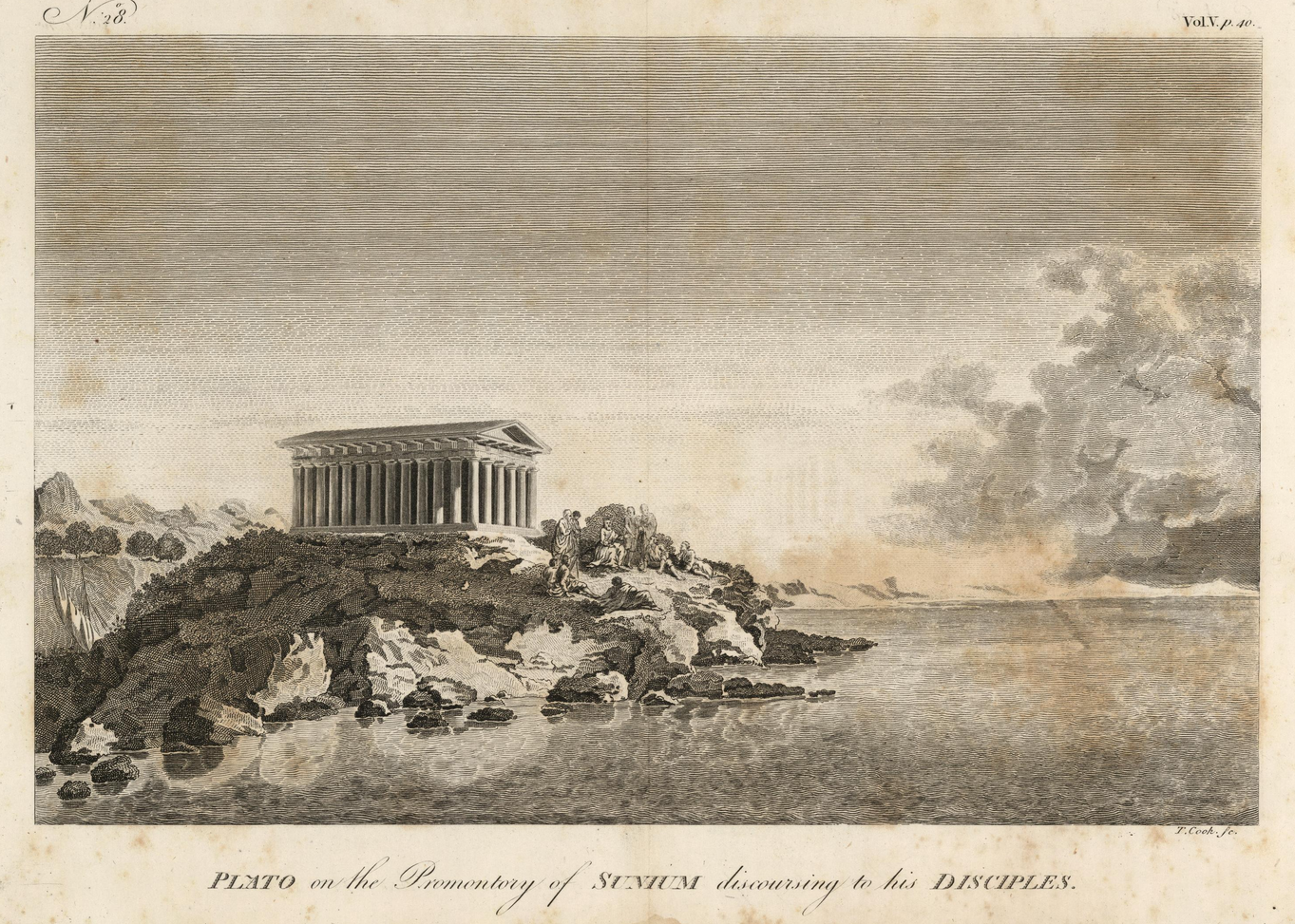
More than two thousand years ago the ideal manner of conveying knowledge was articulated. In the Seventh Letter, traditionally attributed to Plato, real understanding is said to result from prolonged engagement with a subject and with other minds — until suddenly a light is kindled in one soul by a spark leaping from another. Knowledge, Plato holds, is an earned awakening that occurs only after sustained and engaged effort.
In short, the most sacred role the university performs is keeping that vital spark alive. Yet in recent decades, as the Yale Committee on Trust in Higher Education recently found, “universities have been expected to be all things to all people”. At worst, the university has become little more than a credentialing factory, with an accompanying emphasis on providing codified knowledge to ease graduates’ entry into lucrative professional careers. Grade inflation, which has resulted in a large majority of students earning high marks, became endemic and, in so doing, signaled the fundamental dilution of university epistemic standards.
Even before the widespread onset of artificial general intelligence (AGI), economic warning signs are appearing that suggest the precariousness of the higher education system.
For several generations the earnings premium enjoyed by college graduates expanded. A degree was not merely a credential — it was confirmation of acquired base knowledge which was rewarded in the labor market. But new research by Jose Azar, Mireia Gine and Javier Sanz-Espin finds that this trend has now reversed. The college wage premium fell eight percent from 2022 to 2026. More strikingly, their analysis finds the first sustained negative growth in relative demand for college-educated labor in roughly a century. Their related work also finds that wages have weakened disproportionately in occupations most exposed to generative AI. Causality in economic research is a fickle thing, but the patterns are difficult to dismiss.
A second line of evidence points in the same direction. Researchers at Stanford's Digital Economy Lab found that employment appears to have weakened most among young workers in occupations that rely heavily on codified knowledge: standardized and documented knowledge that can be taught through textbooks and courses. By contrast, experienced workers have fared better in occupations that depend more on tacit knowledge acquired through practice and repeated exposure.
If not yet a message of doom, the advance of AI is unmistakably rendering codified knowledge taught in universities ever cheaper, while judgment, experience, and other forms of tacit knowledge, which for decades have been neglected by university administrators, are becoming more valuable.
Thus far US universities are confronting the arrival of AI and the broader threat to literacy largely through a collection of piecemeal responses. Florida and Texas offer revealing examples. The Florida College System recently announced it is considering a proposed system-wide rule requiring new policies governing AI use by students, faculty, staff and others. And Texas Governor Greg Abbott recently directed the Texas Higher Education Coordinating Board to develop a statewide framework for three-year bachelor's degree pathways, especially in high-demand fields. The goal is to reduce tuition and living costs while sending students into the workforce sooner.
Both initiatives are sensible. Each is attempting to update existing educational structures. But neither is reconsidering the fundamentals of not only what students learn, but how they learn.
This is neither a new nor theoretical concern. In ancient Greece, Plato was confronted with an analogous problem to AI. In the Phaedrus, Socrates recounts the story of the Egyptian god Theuth, inventor of writing, who presents his creation as an aid to wisdom and memory. King Thamus gives the opposite judgment. Writing, he warns, encourages people to rely upon external symbols rather than exercising their own memories. That is, they may acquire the appearance of wisdom without possessing wisdom itself.
Crucially, Plato was distinguishing between a tool that conveys thought and the act of understanding itself. That distinction is the central problem facing education in the age of AI.
There are yet stirrings within the ivory tower. Harvard College's new dean, David Deming, speaking to incoming students in 2026, stated that AI will eventually commodify expertise. He also emphasized the need for Harvard’s learning environment to become "radically more communal" to counterbalance AI.
Dartmouth president Sian Leah Beilock, in a recent essay, extended this thinking, arguing that universities should teach students to do what AI cannot: decide which questions matter, exercise judgment, navigate ethical complexity and uncertainty, and take responsibility for decisions. Rejecting the idea of simply banning AI, Beilock noted that one professor may reasonably require an old-fashioned blue-book essay. Another may require students to use AI and then audit the result. The human capability being developed or evaluated determines the technology employed.
The voices from Harvard, Dartmouth and others are beginning to outline pieces of a new educational model. But they remain inchoate, and mostly theoretical. No comprehensive vision has yet emerged about what students should know, what they should be able to do without machines, what they should learn to do with machines, and what kind of human being a university should ultimately try to form in an age of AGI.
There is still another piece to this puzzle. Decades ago, the writer Dorothy Sayers, who was one of the first women to graduate from Oxford University, warned that education had become too preoccupied with teaching subjects while largely neglecting teaching students the tools by which subjects are actually learned. In her 1947 essay, The Lost Tools of Learning, Sayers looked back to the medieval Trivium, which was premised on teaching grammar, dialectic and rhetoric. These were not simply three bodies of information. They were disciplines of mind. Grammar supplied the structure and language of knowledge. Dialectic taught the student to reason, distinguish and test propositions. Rhetoric taught the student to organize understanding and express it persuasively. The purpose was to equip the pupil with the means of learning before immersing them in specialized fields of knowledge.
Seventy-nine years later, Sayers' argument is even more prescient. If the AI in a student's pocket can supply an effectively unlimited amount of information within seconds, the university must not merely teach the products of thought but return to teaching the tools of thought. The ivory tower must reclaim its intellectual heritage.
Within a revitalized epistemic framework, AI can become, as Deming and Beilock suggest, an extraordinary educational instrument. Andrej Karpathy, a leading AI scientist who worked at OpenAI and Tesla, has turned his attention to precisely this possibility. His Eureka Labs project imagines an AI-native school in which expert teachers design the curriculum while an AI teaching assistant assists students individually, adapting instruction to their needs.
Alexander the Great had Aristotle as his tutor. The modern analogue is an endlessly patient and customized AI-tutor on the shoulder, or in the pocket, of every student. Applied rigorously, the concept could transform the architecture of education.
A plausible strategy to counter the new dark ages emerges. The university must preserve deep reading and unaided reasoning; deliberately cultivate judgment; teach students to work intelligently with AI; and intensify forms of learning rooted in human interaction and experience. The framework would combine the humanistic depth of the liberal arts with both individualized AI tutoring and an intensified emphasis on communal learning.
The overarching point of education is to equip independent human beings with the capability of thinking, judging, acting and contributing to the world around them. As Ralph Waldo Emerson noted in his American Scholar address, delivered in 1837 at Harvard, "The one thing in the world, of value," he said, "is the active soul." For Emerson, the ultimate goal of learning was "Man Thinking."
Now is the time for “Man Thinking”. Because AI is likely the greatest intellectual challenge the modern university has ever faced. Because AI may also prove to be the greatest opportunity the university could wish for. Because scarcity of knowledge is disappearing. Because the more capable machines become at conveying codified knowledge, the more education must become something beyond credentials and the provision of routinized knowledge.
Marriott's dark age need not be inevitable. In the wake of Europe’s earlier dark age, Bologna, Oxford, Cambridge, Salamanca and other universities became centers of intellectual renewal. There are more universities today, with greater resources still.
Knowledge is no longer threatened. It is understanding that is endangered. The spark of human ingenuity and imagination created the age of AI. The great and urgent and historic task of the university now is to ensure that the spark which created it is not extinguished by its creation.
“Man Thinking must not be subdued by his instruments.”
— Ralph Waldo Emerson, The American Scholar